
Blog · September 10, 2026
How Often Should Your Dog Be Groomed? A Simple Schedule by Coat Type
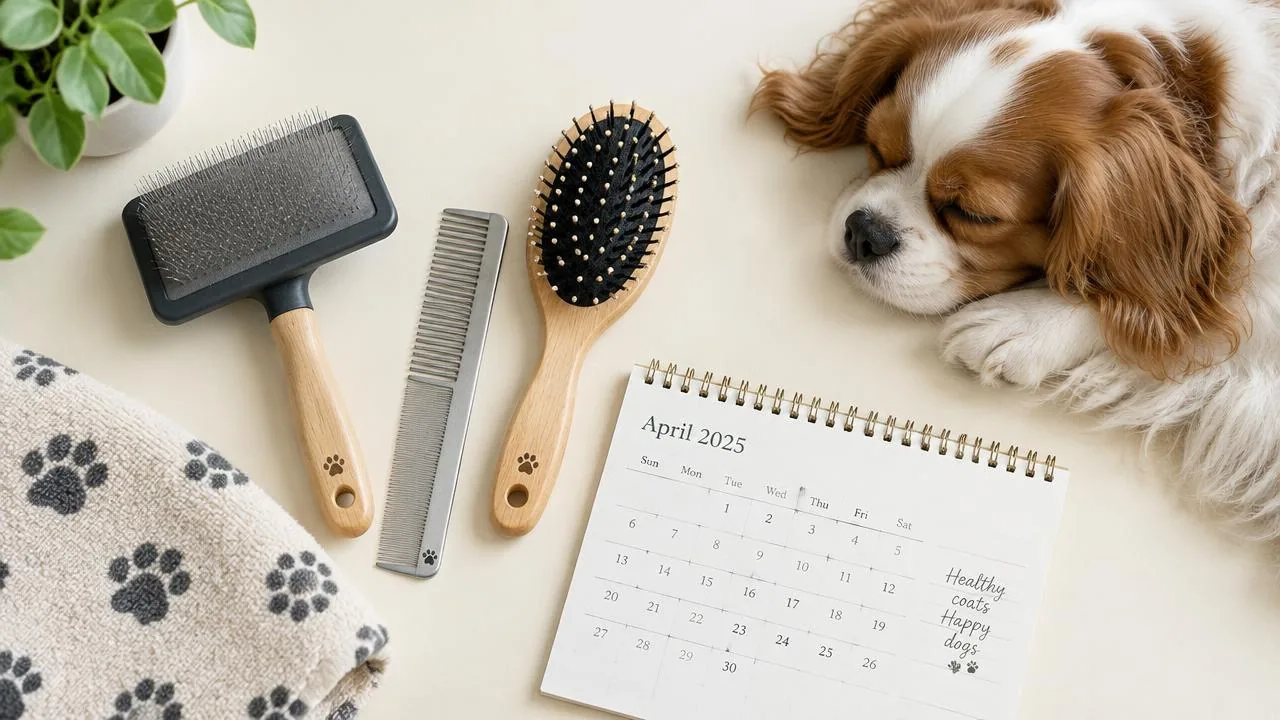
"How often should I get my dog groomed?" It is one of the most common questions dog owners ask. The honest answer is: it depends on the coat.
A short-haired Beagle and a curly Goldendoodle need very different care. Here is a simple way to think about it.
Start with your dog's coat type
Most dogs fit into one of four groups.
- Short, smooth coats: Labs, Beagles, Boxers, Pit mixes, Chihuahuas.
- Double coats: Huskies, Shepherds, Goldens, Corgis, Aussies.
- Curly or wavy coats that keep growing: Poodles, Doodles, Bichons.
- Long, silky coats: Shih Tzus, Yorkies, Maltese, Havanese.
A simple schedule by coat type
Use this as a starting point. Your groomer can adjust it after meeting your dog.
| Coat type | Brushing at home | Professional visit |
|---|---|---|
| Short, smooth | Once a week | Every 6 to 10 weeks |
| Double coat | 2 to 3 times a week, more when shedding | Every 6 to 10 weeks, more in shedding season |
| Curly or wavy | Every day or every other day | Every 4 to 6 weeks |
| Long, silky | Every day | Every 4 to 6 weeks |
Nails usually need attention more often than the coat. If you hear clicking on hard floors, they are due.
How seasons change the schedule
In our area, summer is long and hot, and spring brings dry grass and foxtails. A few changes help:
- Late spring and summer: many owners book a little more often to keep feet, faces, and coats tidy.
- Shedding season: double-coated dogs often need extra help with loose undercoat.
- Windy, dusty weeks: dogs who spend time outside may need a bath sooner.
- Cooler months: some owners let coats grow a little longer between visits.
How age changes the schedule
Puppies benefit from short, frequent, positive visits. The goal is to build good habits, not a perfect haircut.
Senior dogs may do better with shorter appointments more often, instead of long visits. A neat coat is also easier to keep clean for older dogs who move less. If your older dog has health concerns, check with your veterinarian.
A simple at-home brushing routine
Five to ten minutes is enough for most dogs. Keep it calm and end on a good note.
- Pick a brush that fits the coat. A rubber brush for short coats, an undercoat rake for double coats, and a slicker brush plus a metal comb for curly and long coats.
- Start with easy areas like the back and sides.
- Move to the trickier spots: behind the ears, the armpits, the legs, and the tail.
- Finish by running a metal comb through. If it glides, you are done.
- Check the feet, ears, and eyes while you are there.
- Reward your dog with praise or a small treat.
Signs your dog is due
- Fur is covering the eyes
- The feet look like slippers, or leave more dirt inside
- The coat feels tangled or clumpy
- Your dog smells, even after a rinse
- You see more loose hair around the house than usual
When to call a groomer
If home brushing is getting hard, or your dog's coat is getting ahead of you, it is a good time to book. Regular visits are often shorter and easier on your dog than waiting until the coat needs a lot of work.
Set up a schedule with us
We come to your driveway, so keeping a regular rhythm is easy. Call or text (310) 993-5993, or book online.
Related service
Bath and Tidy