Blog · September 3, 2026
Matted Fur: Why It Happens, Why It Hurts, and How to Prevent It at Home
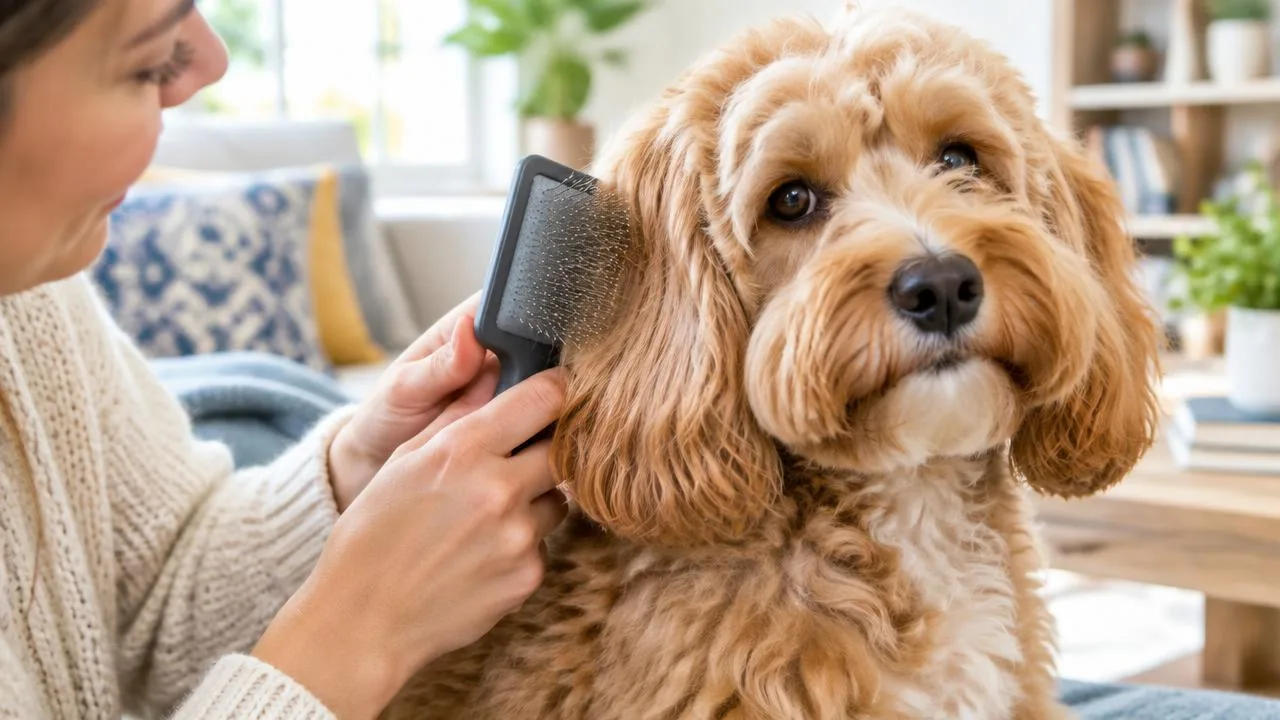
Mats can sneak up on you. Your dog looks fluffy on top, but underneath, the fur near the skin has turned into tight clumps. By the time you notice, they can be hard to brush out.
Understanding how mats form makes them much easier to prevent.
What is a mat?
A mat is a tight clump of tangled fur. It starts when loose hair that has shed does not fall away. Instead, it wraps around the hair still growing. With movement and moisture, that tangle twists tighter and grows.
Why mats are uncomfortable
Mats pull on the skin every time your dog moves. Large mats can make it hard for air to reach the skin, and they can trap dirt and moisture. Some dogs become sore or itchy under mats. If you see redness, sores, or your dog seems in pain, check with your veterinarian.
Where mats usually start
Mats love places with friction or moisture. Check these spots first:
- Behind the ears and on the ear flaps
- In the armpits and where the front legs meet the chest
- Along the collar or harness line
- On the back of the thighs and the "pants"
- Under the tail and around the sanitary area
- Between the toes
Why wet coats make it worse
When a curly or long coat gets wet and is left to air dry, the hairs shrink and cling together. Swimming in the pool, playing in sprinklers, or a rainy walk can all lead to mats if the coat is not brushed and dried afterward.
Bathing a dog with existing tangles can also tighten them. That is why it helps to brush before a bath, not just after.
Other common causes
- Skipping brushing for a week or two, especially on curly coats
- Brushing only the top layer of the coat
- Collars, harnesses, and clothes rubbing in one spot
- Seasonal shedding, when loose hair builds up quickly
- Lying in the same position for long periods, common in older dogs
The right brush for each coat
- Curly and wavy coats: a slicker brush and a sturdy metal comb with wide and narrow teeth.
- Long, silky coats: a pin brush, a gentle slicker brush, and a metal comb.
- Double coats: an undercoat rake and a slicker brush.
- Short coats rarely mat, but a rubber brush helps remove loose hair.
The metal comb is your best tool for finding mats. If it gets stuck, you have found one.
Line brushing basics
Line brushing is how groomers make sure they reach the skin. It takes a little longer at first, but it works.
- Start at the bottom of a leg and work up.
- Use one hand to hold the fur up, so you can see a thin line of skin.
- Brush the fur below that line down and away, in small strokes.
- Move your hand up a little, make a new line, and repeat.
- Follow with the metal comb all the way to the skin.
- Be gentle. Hold the base of the hair so you do not pull on the skin.
Small tangles: what you can do
For a small, loose tangle, hold the fur at the base close to the skin, then use the end of the comb to pick at the outer edge, a little at a time. A bit of detangling spray made for dogs can help.
Never try to cut a mat out with scissors. Skin can get pulled up into a mat, and it is very easy to cut it by accident.
When to stop and call a groomer
- The mat is tight against the skin
- Your dog cries, pulls away, or tries to nip
- Mats cover a large area, like the whole belly or legs
- You can see redness or irritation underneath
A groomer can decide with you whether to work the mats out or do a comfort clip so your dog can start fresh.
Let us help
Our grooming van comes to your driveway, and we always put your dog's comfort first. Call or text (310) 993-5993, or book online.
Related service
De-Matting