Blog · September 24, 2026
Should You Shave Your Husky or Golden for Summer? What Temecula Valley Heat Means for Double Coats
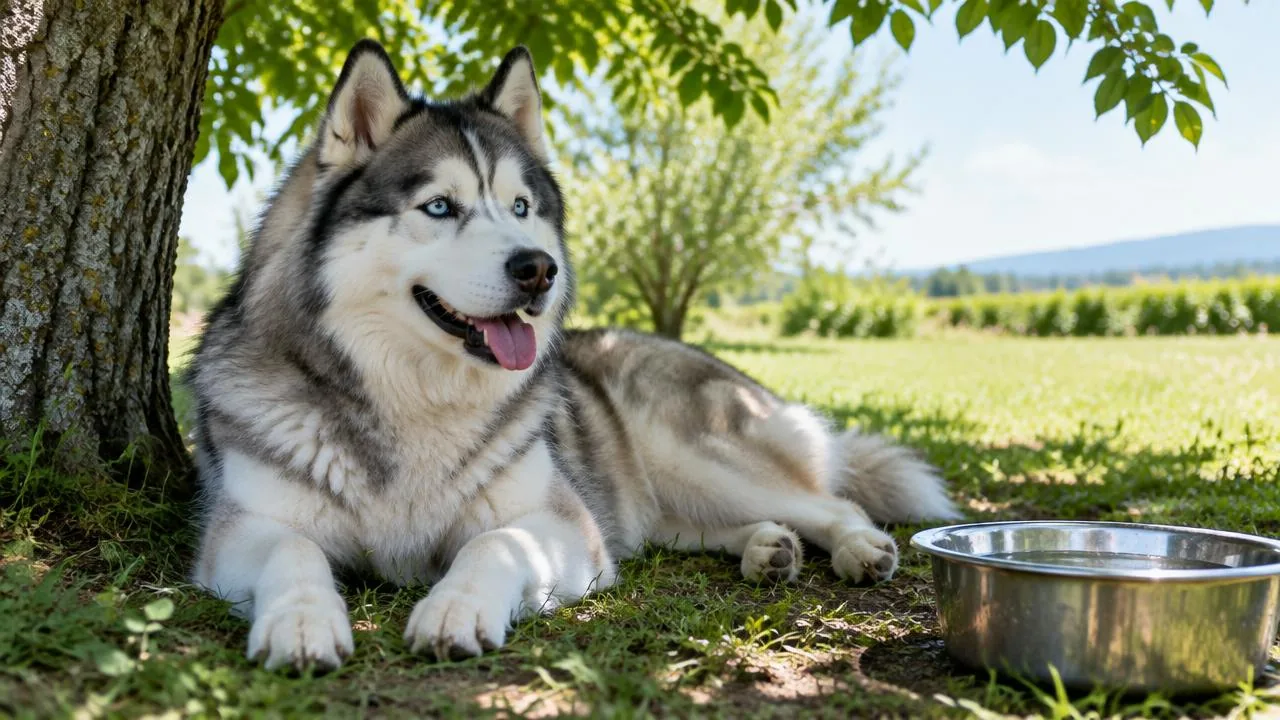
When it is over 100 degrees in Menifee or Woodland Hills, and your Husky is lying flat on the kitchen tile, it is natural to think, "He would be so much cooler without all that fur."
It is a kind thought. But for many double-coated dogs, a full shave is not the answer. Here is how their coat really works, and what helps more.
What is a double coat?
A double-coated dog has two layers of fur. The undercoat sits close to the skin. It is soft, thick, and fluffy. The topcoat, sometimes called guard hair, is longer and coarser. It lies over the undercoat like a roof.
Breeds with double coats include Huskies, German Shepherds, Golden Retrievers, Labs, Corgis, Australian Shepherds, Pomeranians, and many mixes of these breeds.
How the coat handles heat
The two layers work together. The topcoat helps block direct sun from reaching the skin. When the loose undercoat is brushed out, air can move through the coat more easily, close to the body.
Double-coated dogs also shed their undercoat on their own as the weather warms. This is often called "blowing coat." If that loose fluff stays trapped in the coat, it holds heat in. If it is removed, the coat can do its job.
Why shaving can backfire
Shaving cuts both layers down to the same short length. That can cause a few problems:
- The skin loses its shade from the sun.
- The two layers may grow back at different speeds. Some dogs grow back patchy, fuzzy, or uneven.
- In some dogs, the topcoat is slow to return, leaving mostly soft undercoat that mats easily.
- The dog may not actually feel cooler, because the real issue was trapped loose undercoat.
There are times when a shave-down is the right choice, such as a coat that is badly matted. That is a comfort decision made case by case. If you are worried about your dog's skin, coat, or how they handle heat, check with your veterinarian.
What really keeps a double-coated dog cooler
These steps tend to help much more than a shave:
- Remove the loose undercoat. Regular brushing, plus a professional de-shed during shedding season, lets air reach the skin.
- Plan walks for early morning or after sunset. Midday sidewalks and trails get very hot.
- Test the pavement. Hold the back of your hand on it for a few seconds. If it is too hot for you, it is too hot for paws.
- Offer shade and fresh water all day, inside and outside.
- Give your dog a cool place to lie down, like tile floors or a shaded patio.
- Never leave a dog in a parked car, even for a few minutes.
Brushing a double coat at home
A good home routine makes a real difference between professional visits.
- Use an undercoat rake or a slicker brush made for thick coats.
- Brush in the direction the fur grows, working in small sections.
- Lift the topcoat with one hand and brush the undercoat underneath with the other.
- Pay extra attention to the back of the thighs, behind the ears, and the neck ruff.
- In heavy shedding weeks, a few short sessions are easier than one long one.
Signs of overheating to watch for
Even with the best coat care, hot days can be dangerous. Know the warning signs:
- Heavy, fast panting that does not settle with rest
- Thick drool or a very red tongue and gums
- Weakness, stumbling, or confusion
- Vomiting or diarrhea
- Lying down and refusing to get up
If you see these signs, move your dog to shade or air conditioning, offer water, and call your veterinarian right away.
When to call a groomer
If you are brushing and the fur keeps coming, or you see tufts of fluff pulling out on their own, your dog is ready for help. A professional de-shed with a warm bath and a strong dryer can remove far more loose undercoat than home brushing alone.
Book a de-shed at home
We come to your driveway across the Temecula Valley and the Calabasas / West Valley area. Call or text (310) 993-5993, or book online.
Related service
De-Shedding Treatment